
Help and advice

Trendy and Vibrant: The Hottest Braces Colours in the UK
The most popular braces colours in the UK include vibrant options like pink, radiant red, brilliant blue, playful purple, and subtle tooth-coloured neutrals. Pink bands experienced high demand following pop culture trends, while blue and purple remain classic choices for versatility and style. Red and orange appeal to wearers seeking bold, high-energy statements. Adult patients frequently select tooth-coloured ceramic brackets or neutral elastic bands to maintain a discreet appearance. Orthodontists replace coloured elastic bands every six weeks during routine adjustments to maintain vibrant aesthetics.

What to Expect During a Home Whitening Treatment: A Step-by-Step Guide
Professional home teeth whitening involves using custom-moulded dental trays filled with prescription carbamide peroxide gel worn overnight. An initial dental assessment determines suitability and enables the fabrication of bespoke trays tailored to fit individual teeth precisely. Patients apply the prescribed whitening gel into the custom trays and wear them during sleep for a period of five to fourteen days. The active carbamide peroxide formula penetrates enamel to break down both surface and deep intrinsic discolouration. Integrated desensitising agents reduce tooth sensitivity throughout the treatment duration to maintain patient comfort.

How Long Does it Take to Straighten Teeth with Concealed Braces
Straightening teeth with concealed lingual braces requires between 12 and 36 months. Minor dental misalignments resolve in under 12 months. Complex malocclusions or severe crowding require 36 months of active orthodontic movement. Concealed braces bond custom brackets and archwires to the inner lingual surfaces of the teeth. Treatment duration relies on misalignment severity, jawbone density, and regular attendance at six-to-eight-week adjustment appointments. Following appliance removal, patients wear retainers to stabilise bone tissue and prevent orthodontic relapse.

The Science Behind Professional Teeth Whitening Treatment: How It Works
Professional teeth whitening works through an oxidation process using peroxide-based bleaching agents to break down stained compounds within teeth. Hydrogen peroxide or carbamide peroxide penetrates the outer enamel to reach the underlying dentin layer. The peroxide releases oxygen molecules that react directly with coloured chromogen molecules responsible for extrinsic and intrinsic discolouration. This chemical reaction fractures the complex double bonds of pigment molecules, reducing them into smaller, colourless structures. Consequently, the tooth reflects more light, producing a brighter dental shade.

How Esthetic Braces Work: A Step-by-Step Guide to Your Treatment
Esthetic braces work by bonding tooth-coloured or translucent ceramic brackets to the front surfaces of teeth and connecting them with an archwire. This fixed appliance exerts continuous, gentle pressure to shift teeth gradually into proper alignment over twelve to eighteen months. Patients attend adjustment appointments every six to eight weeks to retension the wire and guide tooth movement. The ceramic material mimics natural tooth colour, offering a discreet alternative to traditional metal brackets. Following bracket removal, patients wear a bespoke retainer to stabilise teeth and maintain long-term alignment.

Metal vs Ceramic Braces: Advantages and Disadvantages
Choosing between metal and ceramic braces depends on prioritising durability and cost over cosmetic discretion. Traditional stainless steel braces are highly durable, highly resistant to staining, and represent the most affordable orthodontic option. Conversely, ceramic braces utilise clear or tooth-coloured brackets and wires to provide a highly discreet aesthetic profile. Ceramic systems are smoother and more comfortable, but the brackets are less durable than steel and require a stricter oral hygiene routine to prevent staining. Both fixed appliances correct teeth and bite misalignments over a similar twelve to eighteen-month treatment timeline.

How to Maintain Good Oral Hygiene with Braces Behind Your Teeth
Maintaining oral hygiene with lingual braces attached behind the teeth requires brushing after every meal using a soft electric or manual toothbrush. Users brush at a 45-degree angle towards the gumline as well as above and below the metal brackets. Daily flossing with interdental brushes or a water flosser removes trapped food particles from between teeth and brackets. Swishing an antimicrobial mouthwash twice daily cleans hard-to-reach areas to prevent plaque and cavity formation. Regular orthodontic check-ups every six to eight weeks ensure proper maintenance and oral health monitoring.
How Long Do Clear Braces Take to Work: From Consultation to Reveal
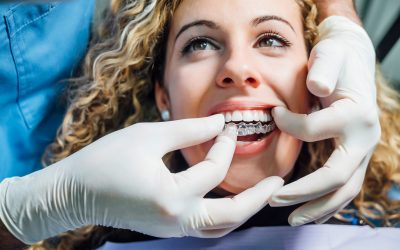
Clear braces take between 6 and 18 months to complete treatment from initial consultation to final results. The process begins with digital imaging and bespoke aligner fabrication over two to four weeks. Patients wear custom aligners for twenty-two hours daily, changing sets every one to two weeks. Noticeable tooth movement appears within the first eight to twelve weeks. Mild alignment corrections finish in six months, whereas complex bite adjustments require up to eighteen months. Routine retainer wear concludes the process to safeguard the newly aligned bite.

Clarity Braces: How a Straight Smile can Change your Life
Clarity braces are fixed orthodontic appliances featuring translucent, tooth-coloured ceramic brackets designed for discreet teeth straightening. These brackets bond directly to the front surface of each tooth. A thin metal archwire threads through the brackets to exert continuous mechanical pressure. This pressure gradually guides misaligned teeth into their correct positions over several months. Rounded, low-profile bracket contours reduce friction against soft oral tissues. Clear elastic ligatures secure the wire to each bracket and require routine replacement to prevent discolouration. They provide the mechanical strength of traditional metal braces with reduced visual prominence.
BOOK A CONSULTATION
Find out how our specialist team can find your inner smile.
Get in touch to arrange your free consultation.